.png)
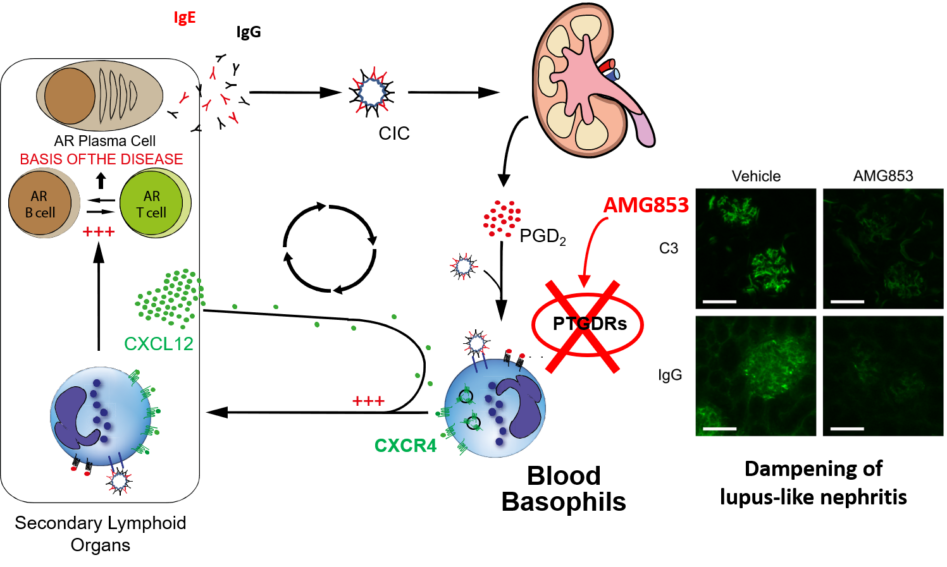
Systemic lupus erythematosus (SLE) is an autoimmune disease mainly affecting women of childbearing age. SLE is characterized by the presence of autoantibodies raised against nuclear antigens. Basophils contribute to lupus disease amplification by supporting both the number and the maturation of antibody secreting B cells. They act by accumulating in spleen and lymph nodes through a prostaglandin D2 (PGD2)-induced mechanism. Here, we show that the use of a bi-specific antagonist that target both PGD2 receptors expressed by basophils, in a lupus-like mouse model (Lyn–/– mice) allows dampening lupus-like disease activity. This concept validation is mandatory for further pre-clinical and clinical development of this innovative therapeutic strategy for SLE patients.
Link to the online article (open access):
https://www.frontiersin.org/articles/10.3389/fimmu.2022.824686/full
Christophe Pellefigues, John Tchen, Chaimae Saji, Yasmine Lamri and Nicolas Charles