.png)
Fetal microbiota transplantation as a novel therapeutic approach in IgA nephropathy?
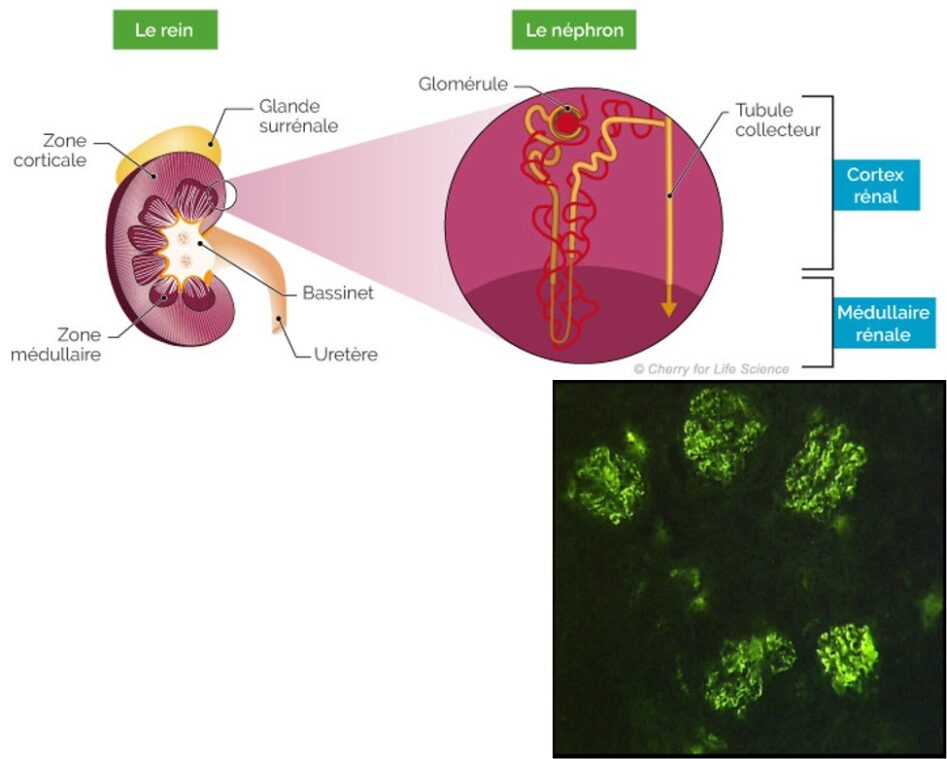
IgA nephropathy (IgAN) is one of the leading causes of kidney failure worldwide and has not yet a specific treatment. We used a model of humanized mice that develop the disease spontaneously following transgenic expression of human IgA1 and its receptor. These mice develop renal deposits of IgA1 associated with proteinuria and hematuria. Since IgAN is known to be associated with dysbiosis of the gut microbiota, we confirmed our previously published results (Chemouny et al, NDT 2019 ) showing that antibiotherapy is able to completely deplete the microbiota and reverse the disease. In this study, we transplanted the microbiota of patients by ‘fecal material transfer’ (FMT) into these mice after treatment with ABT. We have shown that only FMTs from patients with severe NIgA are able to reconstitute disease in mice previously treated with ABT and not FMTs from patients with NIgA with normal renal dysfunction. In addition, the FMTs of healthy subjects reduce proteinuria in these sick mice, opening up new therapeutic avenues in IgAN by the FMT approach obtained from healthy subjects.
Lauriero G, Abbad L, Vacca M, Celano G, Chemouny JM, Calasso M, Berthelot L, Gesualdo L, De Angelis M, Monteiro RC. Front Immunol. 2021 Oct 12;12:694787. doi: 10.3389/fimmu.2021.694787. eCollection 2021. PMID: 34712223
CD89, a potential biomarker and a new therapeutic target for IgA nephropathy.
The pathogenesis of IgA nephropathy is defined by acquired autoimmunity involving immune complexes composed of galactose-deficient IgA1 (Gd), anti-Gd-IgA1 autoantibodies and the soluble form of the IgA receptor (CD89). Although the role of Gd-IgA1 and autoantibodies is well established, the involvement of soluble CD89 in the pathogenesis of NIgA remains unknown. We have studied a large cohort of childhood NIgA which may progress to acute nephritis with rapid loss of renal function. We have shown that the levels of circulating IgA complexes containing soluble CD89 and free soluble CD89 were correlated with proteinuria, as well as with histological markers of disease activity, including proliferation of mesangial cells. Mesangial deposits of soluble CD89 have been detected in patient biopsies. The biochemical study revealed that soluble CD89 bound covalently to IgA and confirmed the presence of free soluble CD89 in the serum of sick children. We have shown both in vitro and in vivo that soluble CD89 is a strong inducer of mesangial cell proliferation. Thus, our results suggest that soluble CD89 plays an essential role in the pathogenesis of NIgA, being a potential biomarker and a new therapeutic target.
Soluble CD89 is a critical factor for mesangial proliferation in childhood IgA nephropathy.
Cambier A, Gleeson PJ, Abbad L, Canesi F, da Silva J, Bex-Coudrat J, Deschênes G, Boyer O, Rabant M, Ulinski T, Hogan J, Peuchmaur M, Berthelot L, Monteiro RC. Kidney Int. 2021 Oct 28:S0085-2538(21)00954-6. doi: 10.1016/j.kint.2021.09.023. Online ahead of print. PMID: 34756952