

Immune signaling in cancer and infection
Team Saveanu
Scientific areas : Immunology, Signaling and Cellular Dynamics
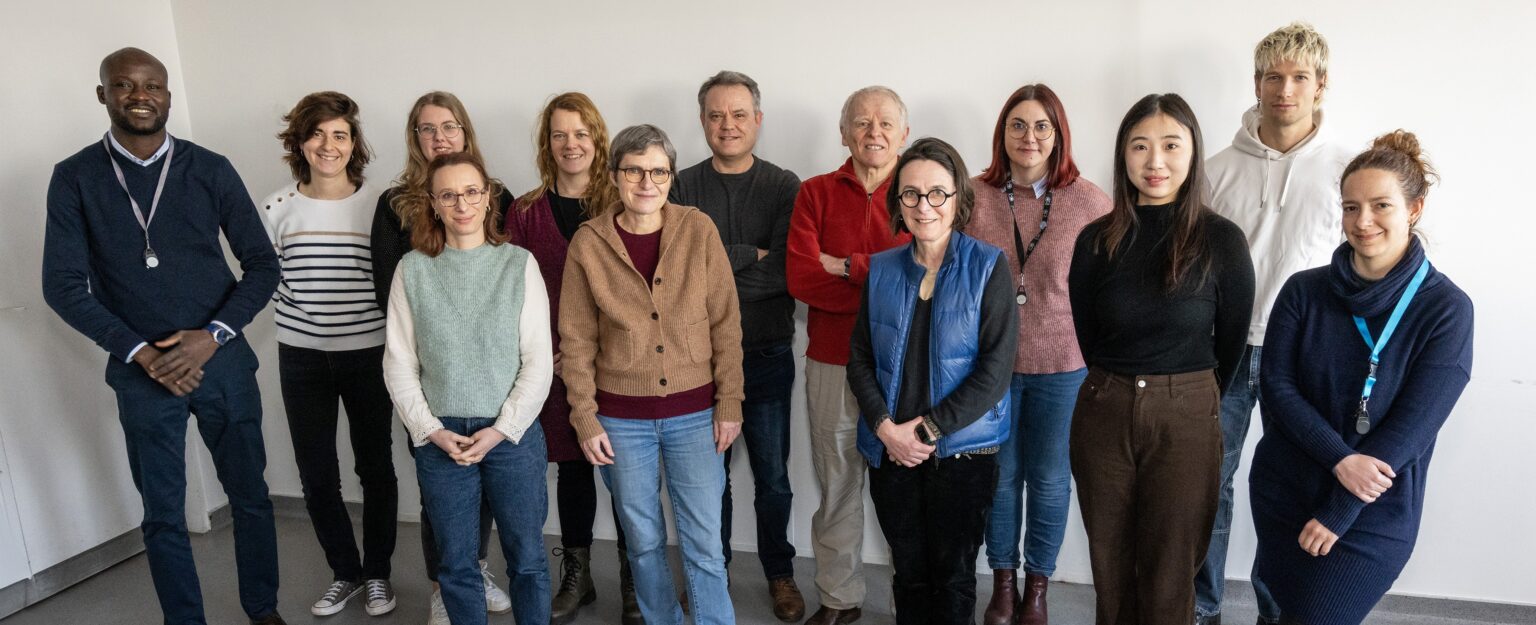
Team composition
Our team aims to understand how the immune system recognizes and eliminates pathogen-infected or cancerous cells. To eliminate these cells, T lymphocytes must recognize them through a process that requires specific priming of naïve T cells against antigens expressed by the cancerous or pathogen-infected cells. Two populations of immune cells are essential in this process: myeloid (antigen-presenting) cells and T lymphocytes.
First, T lymphocytes combine antigenic and inflammatory signals via their T cell receptors (TCRs) and cytokine receptors. Myeloid cells act at two levels, firstly by presenting on their surface the major histocompatibility complex (MHC) loaded with antigenic peptides which activates the TCR, and secondly by producing a plethora of cytokines which activate the cytokine receptors expressed by T lymphocytes. The signaling cascades downstream of the activation of the TCR and cytokine receptors are tightly regulated by myeloid cells. Regarding pathogen-infected cells, their recognition by T lymphocytes is highly dependent on the interactions between the type of pathogen and the host cell.

In this context, our team studies:
- How are T lymphocytes activated by their TCR? This complex situation involves antigen presentation by the antigen-presenting cell and TCR signaling by the T cell. In myeloid cells, Loredana Saveanu’s group studies how endocytic trafficking controls the presentation of antigens and the activation of innate immunity receptors. In T lymphocytes, he studies antigen receptor signaling. Its goal is to improve the signaling of T-cell antigen receptors and the ability of myeloid cells to eliminate cancerous or pathogen-infected cells.How do myeloid cells regulate T-cell activation through cytokine production? These mechanisms are highly dependent on cytokine trafficking in myeloid cells and cytokine receptor signaling in T cells. Odile Devergne’s group, which joined our team in 2024, studies the molecular mechanisms that regulate the biogenesis and secretion of IL-12 family cytokines in myeloid cells and aims to investigate the trafficking and signaling of receptors for this cytokine family in T cells.
How do interactions between pathogens and host cells affect the host immune response? In this area, we are looking for to understand how pathogenic bacteria hijack the immune system to survive and how it is possible to modify these host-pathogen interactions to develop new ways to combat these infections. Philippe Verbeke and Colette Kanellopoulos-Langevin study host-pathogenic bacteria interactions. Their goal is to find new therapeutic targets to prevent bacterial proliferation and to develop new vaccination methods against bacteria that pose a public health problem.