

Role of blood vessels in liver diseases
Team Rautou
Scientific areas : Pathophysiology of inflammatory & fibrotic diseases axis
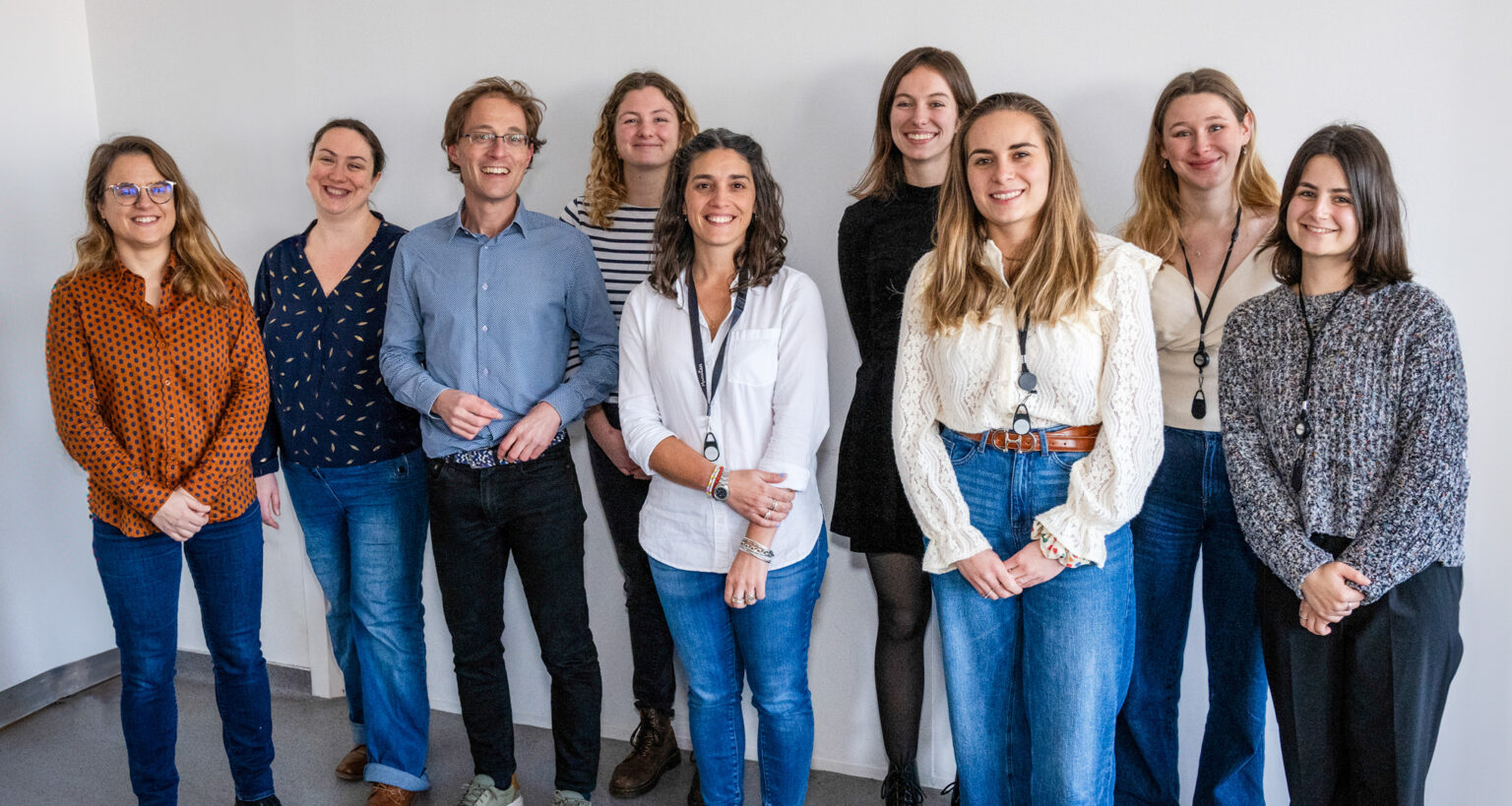
Team composition
Emeritus
Project Manager
Researcher(s)
Our team is working on the role of blood vessels in liver diseases. We are interested in rare vascular liver diseases (Budd-Chiari syndrome, extrahepatic portal vein thrombosis, and portosinusoidal vascular disorder), steatohepatitis associated with metabolic dysfunction, and cirrhosis.
Current research directions:
Sinusoidal endothelial cells of the liver in the progression of liver diseases
Extracellular vesicles in liver diseases
Portosinusoidal vascular disease
Sinusoidal endothelial cells of the liver in the progression of liver diseases liver.
Liver Sinusoidal Endothelial Cells in the Development of Liver Diseases Recent advances indicate that intestinal and visceral adipose tissues play a key role in liver diseases. This suggests that substances are released from these tissues, influencing liver function. Liver endothelial cells are among the first cells to come into contact with blood from intestinal and visceral adipose tissues. They constitute an active interface between the blood and other liver cells. However, the role of liver endothelial cells in liver diseases is paradoxically very poorly understood.
We recently demonstrated that autophagy is defective in the liver endothelial cells of patients with metabolic-associated steatohepatitis (MASH) and that this defect is induced by inflammatory mediators present in the portal blood of patients with metabolic syndrome. We also showed that the autophagy deficiency induces alterations in liver endothelial cells responsible for hepatic inflammation, liver cell death, and liver fibrosis, thus promoting the development of NASH. (Hammoutene A. J Hepatol2019).
 |
 |
Left Primary murine hepatic sinusoidal endothelial cells efficiently take up LDL ac.
Right: Hepatic sinusoidal endothelial cells in a mouse liver section (in green).
Extracellular Vesicles in Liver Diseases
Extracellular vesicles are membrane-bound vesicles released by cells into the extracellular space. They include apoptotic bodies, microvesicles, and exosomes, now referred to as large and small vesicles. Extracellular vesicles are capable of transmitting information from one cell to another. We are currently investigating the role of extracellular vesicles in the progression and complications of liver diseases. To do this, we are analyzing their role in intercellular communication between the liver and other organs, as well as within the liver itself.
We recently demonstrated that microvesicles originating from red blood cells carrying the JAK2V671F mutation transfer a protein (myeloperoxidase) to endothelial cells, thereby enhancing the arterial response. These data may explain the increased cardiovascular events in patients with JAK2V617F myeloproliferative neoplasms. (Poisson J. J Clin Invest. 2020).

Electronic microscopy view from extracellular vesicles in liver vessels
Extracellular vesicles can also be used as biomarkers. We have demonstrated that hepatocyte microvesicles can predict the progression of patients with cirrhosis. (Bissonnette J.Hepatology. 2017 & Payancé A. Hepatology 2018 & Thietart S. Journal of hepatology. 2020).
In 2023, we demonstrated that extracellular vesicles derived from hepatocytes are also capable of predicting liver-related events over a 2-year period in patients with cirrhosis due to Class A alcohol according to the Child-Pugh classification. (Elkrief L. J Hepatol 2023)

Using proteomics on extracellular vesicles, we have identified several new biomarkers that can be used to define extracellular vesicle subpopulations, potentially improving the diagnosis of liver diseases. We are currently validating these results. in large patient cohorts, including the DECISION, PROMICE, and RHU QUID NASH cohorts.
Portosinusoidal Vascular Disease
Formerly called non-cirrhotic portal hypertension or regenerative nodular hyperplasia, this rare disease is characterized by alterations of the portal veins and/or sinusoids, leading, in some patients, to portal hypertension and its complications. We are studying the pathophysiology of this disease as well as the outcomes of patients with this condition. Professor Pierre-Emmanuel Rautou is the head of the research unit dedicated to this study: the Liver Catheterization Unit at Beaujon Hospital.
Podcast of Prof PE Rautou on porto-sinusoidal vascular disease: link