


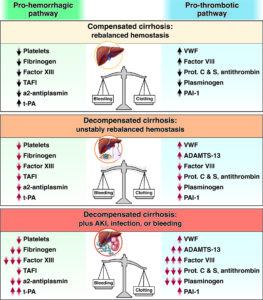
Much has changed over the last 25 years with regard to coagulopathies associated with liver disease. Paradoxically, this form of coagulopathy is relatively hypercoagulable despite the common clinical impression of a haemorrhagic tendency. The latter is largely influenced by portal-mesenteric venous pressure (i.e. portal hypertension) and has little to do with the haemostatic pathways. It cannot be emphasised enough that the INR is not a meaningful measure in this situation and may lead to interventions such as fresh frozen plasma (FFP), which can in fact exacerbate portal pressure and thus pressure-induced bleeding. With regard to procedure-related bleeding, we highlight substantial differences in the definition of high-risk procedures and have proposed a new operational definition based on the applicability of local haemostatic measures, although this requires further investigation. The frequent occurrence of venous thrombosis in these patients necessitates careful consideration of haemostatic pathways and the overall risks and benefits of the procedure. The decision regarding anticoagulant therapy must be based on a comprehensive assessment, including a history of non-portal hypertension-related bleeding, but also on the risk of falls in patients prone to encephalopathy, which may lead to head injury. This is probably best assessed by frailty, but has not yet been sufficiently studied. Underlying these concerns, several overlapping and complicating conditions—including infections and renal dysfunction—must be taken into account. Hereditary forms of thrombophilia in the context of cirrhosis may not outweigh the thrombophilia inherent in liver disease, but warrant further investigation.
Publication link : https://pubmed.ncbi.nlm.nih.gov/37121529/