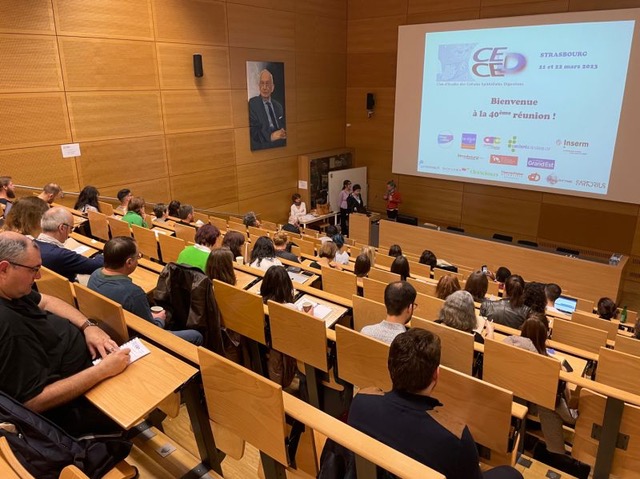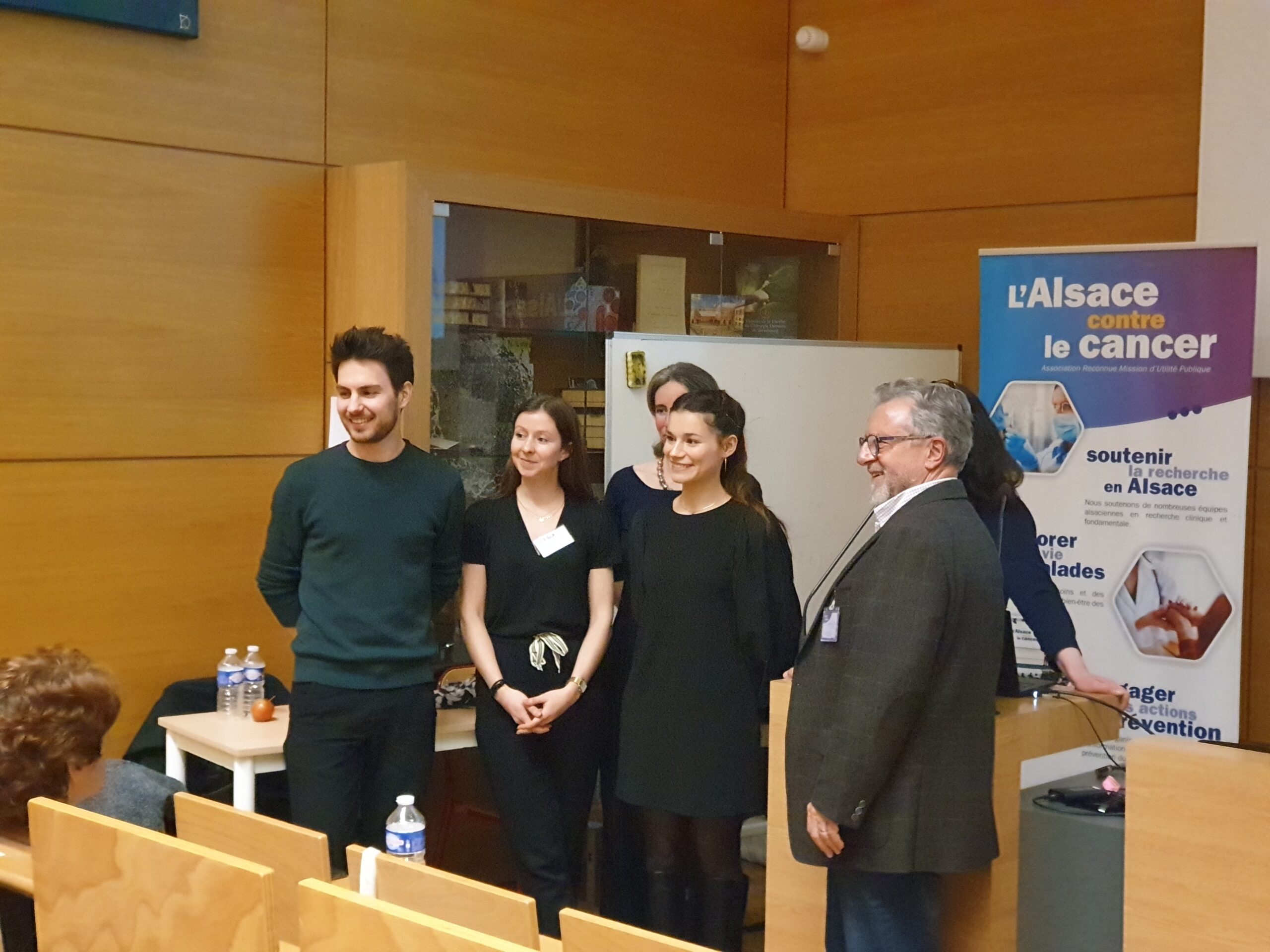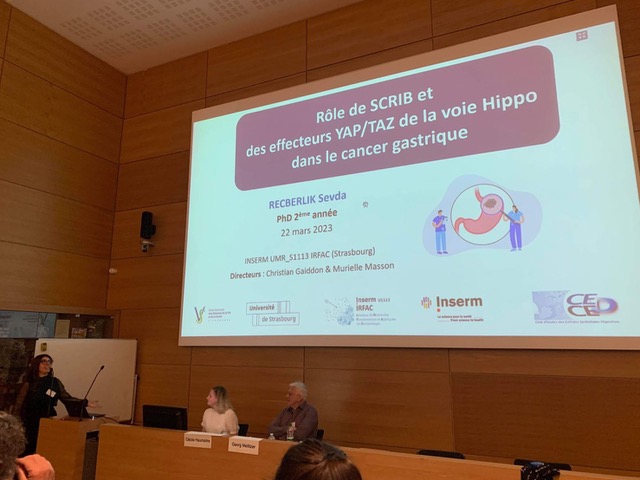


The CRI took part in the 40th edition of theClub d’Etude des Cellules Epithéliales Digestives (CECED) in Strasbourg in March 2023.
The Digestive Epithelial Cells Study Group (CECED) organises an annual conference to highlight scientific advances relating to digestive epithelial cells, which are involved in numerous pathophysiological processes, including cancers, inflammation and the microbiota… This event brings together around 150 participants: researchers, academic staff, university hospital staff, PhD students and postdoctoral researchers.
The main aim of the annual meeting is to foster exchanges between the various French-speaking research teams working in the field of digestive disorders. It places great emphasis on young researchers through the presentation and discussion of their findings, with prizes awarded each year for the best presentations.
Furthermore, every year, the CECED awards the Claude Rozé Prize (worth 1,500 euros) to a young PhD student to help them undertake a postdoctoral fellowship in the field of digestive pathophysiology.
This year, the CRI was represented by:
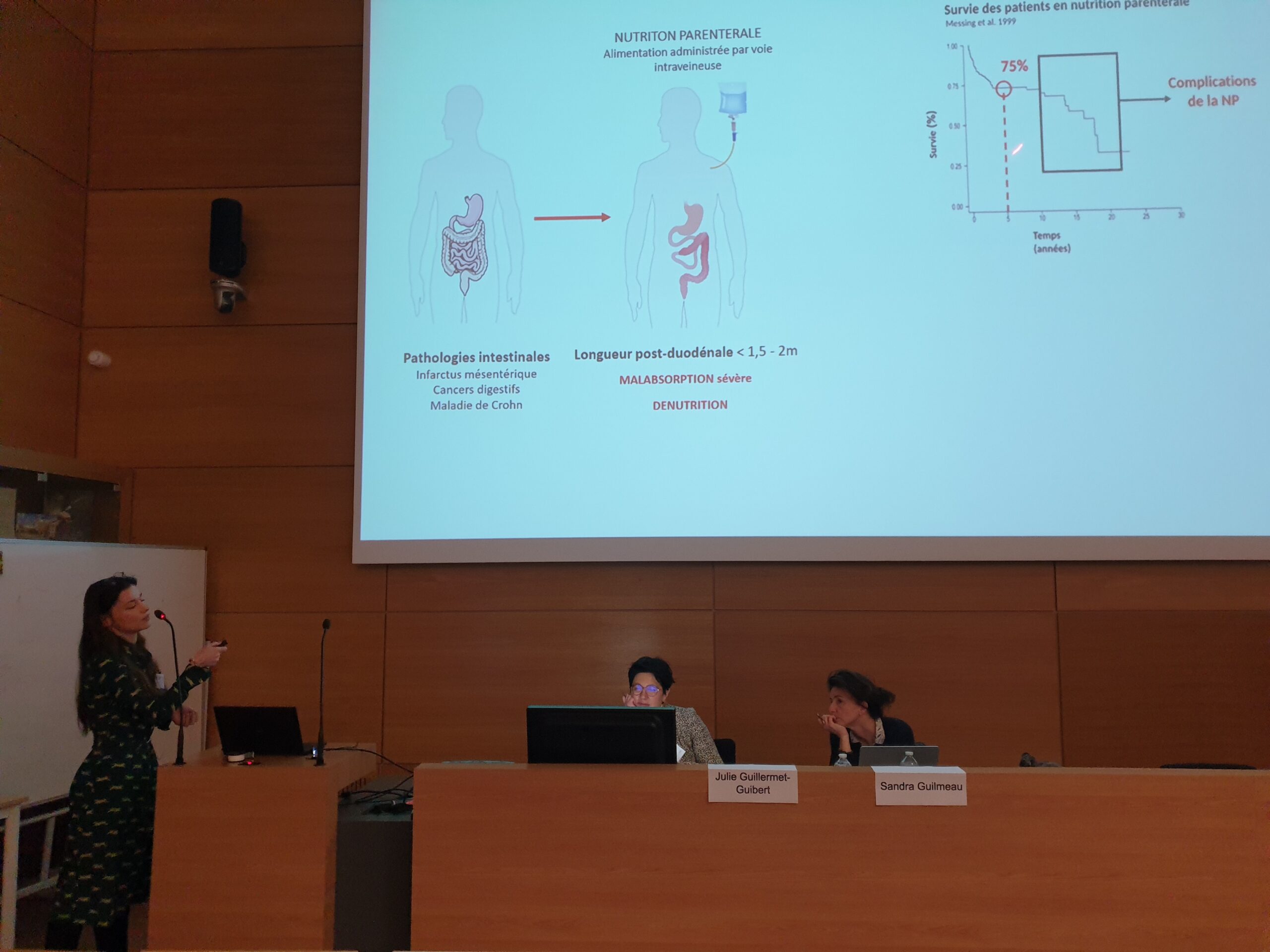
- Alice Garrigues, a first-year PhD student in the PIMS team, who received one of the awards for best oral presentations for her work on adaptations during Short Bowel Syndrome.
A Garrigues, S Fourati, D Atger, B De Dreuille, L Ribeiro Parenti, F Joly, M Le Gall, A Bado, J Le Beyec.
Intestinal adaptations and food intake in a mouse model of short bowel syndrome, with and without treatment with a GLP-2 analogue.
- Maité Casado-Bedmara, a postdoctoral researcher in JP Hugot’s team, who presented her findings on miRNAs in IBD.
Maité Casado-Bedmar, Maryline Roy, Jean-Pierre Hugot, Benoit Chassaing, Emilie Viennois.
Faecal miRNAs are mediators of host-microbiota interactions and key regulators of intestinal permeability and inflammation.
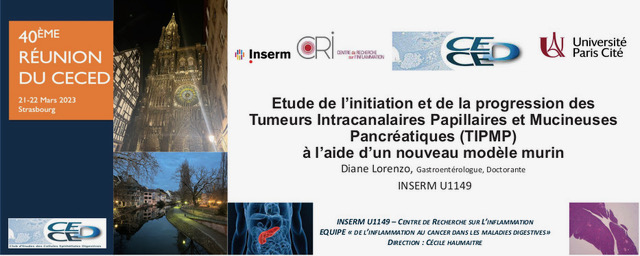
- Diane Lorenzo, a gastroenterologist and a second-year PhD student in the Couvineau Paradis team:
Diane Lorenzo, Anaïs Chassac, Anne Couvelard, Cécile Haumaitre. INSERM U1149 Centre for Research on Inflammation (CRI). Université de Paris Cité – Bichat, Paris.
Study of the initiation and progression of pancreatic intraductal papillary and mucinous tumours (PIPMTs) using a new mouse model.
- Valérie Gratio, IR in the Couvineau Paradis team, also presented:
V Gratio, S Dayot, L Saveanu, P Nicole, T Voisin, A Couvineau. INSERM UMR1149, Centre for Research on Inflammation (CRI), Bichat Faculty of Medicine, Université de Paris Cité, Paris.
Consequences of orexin type 1 receptor (OX1R) activation in human colorectal cancer cells.
Alain Couvineau, Cécile Haumaitre, Pascal Nicole, André Bado and Emilie Viennois also took part in this event