

Hétérogénéité de la tumorigenèse pancréatique (PATH)
Team Haumaitre / Cros
Scientific areas : Oncogenic inflammation & tumor development axis

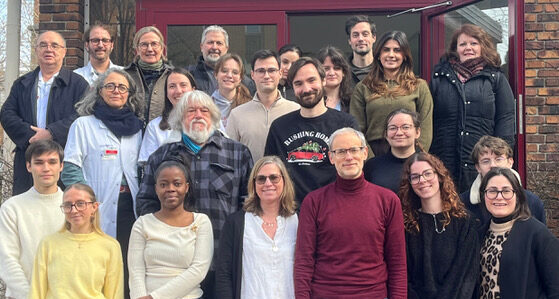
Team composition
Heterogeneity of Pancreatic Tumorigenesis (PATH)
The team focuses on deciphering the cellular and molecular mechanisms involved in the inflammation-cancer sequence in the pancreas, as well as the heterogeneity of the initiation and progression of pancreatic neoplasms, with the aim of deepening our understanding and proposing new therapeutic strategies for these tumors with a very poor prognosis.
- Identifying the factors and molecular mechanisms of pancreatic inflammation and the development of precancerous lesions:
We discovered that the absence of the transcription factor Hnf1b causes pancreatitis and facilitates tumorigenesis (Quilichini, Cell Mol Gastroenterol Hepatol, 2019). We have elucidated the aetiology and pathophysiology of the MODY5/HNF1B pancreatic phenotype in a mouse model of the human disease (Quilichini, J Pathol, 2021). We are studying the factors involved in acinar ductal metaplasia (ADM) and pancreatic intraepithelial neoplasia (PanIN) (Marstrand-Daucé, Int J Mol Sci, 2023). We are exploring the role of Hnf1b in the initiation of intraductal papillary mucinous neoplasms (IPMN) (Ligue Contre le Cancer, 2022; Fondation ARC Fellowship). - The role of metabolic syndrome (MS) and obesity in the development of precancerous lesions:
We have demonstrated that fatty pancreas is associated with higher BMI, fibrosis and PanIN, using quantitative MRI elastography (Rebours, Sci Rep, 2018). We are studying the mechanisms involved and developing MRI sequences to improve the early detection of pancreatic lesions in patients (PAIR Program, 2018). - Heterogeneity and plasticity of pancreatic neoplasms: We studied the inter-tumor heterogeneity of tumor cells (Puleo, Gastroenterology, 2018; Hilmi, Eur J Cancer, 2020; Zao, Clin Cancer Res, 2021), of the stroma (Neuzillet, J Pathol, 2019, 2022) and their clinical impact using artificial intelligence models (Saillard, Nat Commun, 2023). To stratify patients, we have developed biomarkers predictive of sensitivity to gemcitabine, a key drug in pancreatic adenocarcinoma (Raffenne, Cancers, 2019; Piquemal, Cancers, 2020; Bachet, Clin Cancer Res, 2020; Nicolle, Ann Oncol, 2021; Trans Oncol, 2022; J Clin Oncol, 2023).
Our objectives are:
(i) to understand the biological basis of the morphological heterogeneity of pancreatic adenocarcinomas and neuroendocrine tumors through multi-omic spatial profiling (INCa PRTK, 2020; PL-BIO, 2023; MIC, 2022; NRFT, 2022),
(ii) to develop innovative biomarkers based on AI and transcriptomics to predict the risk of progression of pre-neoplastic lesions (ARC Foundation, 2023; Ligue Contre le Cancer, 2019),
(iii) better understand and improve the action of radionuclide-based therapies in neuroendocrine tumors (RHU OPERANDI, 2022). - Orexin system in inflammation and cancer:
Orexin receptors are abnormally expressed in digestive inflammation and multiple cancers (Couvineau et al., 2018-2022). We have demonstrated that orexin induces an anti-inflammatory effect in inflammatory bowel disease, pancreatitis, multiple sclerosis, metabolic syndrome (Messal N, BBA Mol Basis Dis., 2018; Becquet, J Neuroinflammation, 2019) and reduces fat mass (Blais et al., PLOS One, 2017). We have identified that orexin induces SHP2-dependent apoptosis involving the Gq protein, leading to anti-tumor effects (Dayot S, Oncotarget, 2018; Voisin T, Front Oncol, 2022; Gratio, Cytometry, 2023). We have developed a synthetic antibody that mimics the anti-tumor role of orexin in pancreatic adenocarcinoma and other cancers (European Sanofi iAward, 2020-2021, patent).
Key publications
(22)
Predictive value of metabolic state on PanNET response to mTOR inhibitors
Endocr Relat Cancer
27 Sep 2025
Authors :
Cros Jérome,
Margot Bucau,
Matthieu Tihy,
Maxime Palazzo,
Pierre Bourgoin,
Anais Chassac,
Albuquerque Miguel,
Sauvanet Alain,
Dokmak Safi,
Dioguardi Burgio Marco,
Paradis Valérie,
Olivia Hentic,
Ruszniewski Philippe,
De Mestier Louis,
Rebours Vinciane,
Couvelard Anne,
Non-canonical Gq activation by orexin receptor type 2 and lemborexant observed in microsecond molecular dynamics simulations
Scientific Reports
20 Aug 2025
Authors :
Paulina Dragan,
Gratio Valérie,
Voisin Thierry,
Couvineau Alain,
Dorota Latek,
09 Apr 2025
Authors :
Frendi Sonia,
Anaïs Chassac,
Véron Killian,
Raffenne Jérome,
Nicolle Rémy,
Albuquerque Miguel,
Paradis Valérie,
Couvelard Anne,
Cros Jérome,
Rebours Vinciane,
Intrapulmonary-administered myeloid derived suppressor cells rescue mice from Pseudomonas aeruginosa infection and promote a regulatory/repair phenotype
Mucosal Immunology.
16 Mar 2025
Authors :
Born-Bony Maëlys,
Cornu Clémentine,
Villeret Bérengère,
Gratio Valérie,
Romé Voulhoux,
Sallenave Jean-Michel,
10 Feb 2025
Authors :
Hilmi Marc,
Flore Delecourt,
Raffenne Jérome,
Bourega Taib,
Nelson Dusetti,
Juan Iovanna,
Yuna Blum,
Magali Richard,
Cindy Neuzillet,
Couvelard Anne,
Matthieu Tihy,
De Mestier Louis,
Rebours Vinciane,
Nicolle Rémy,
Cros Jérome,