

The Centre de Recherche sur l’Inflammation (CRI) was born on January1, 2014 following the active collaboration of three research units. CRB3- U773, U843 and UMRS 699.
Europe’s leading research center specializing in the study of inflammatory mechanisms. This joint research unit (INSERM, CNRS, Université Paris Cité) brings together the expertise of 14 teams and two junior research groups specialising in basic and clinical research into inflammation of the liver, kidneys, pancreas, gut and immune system.
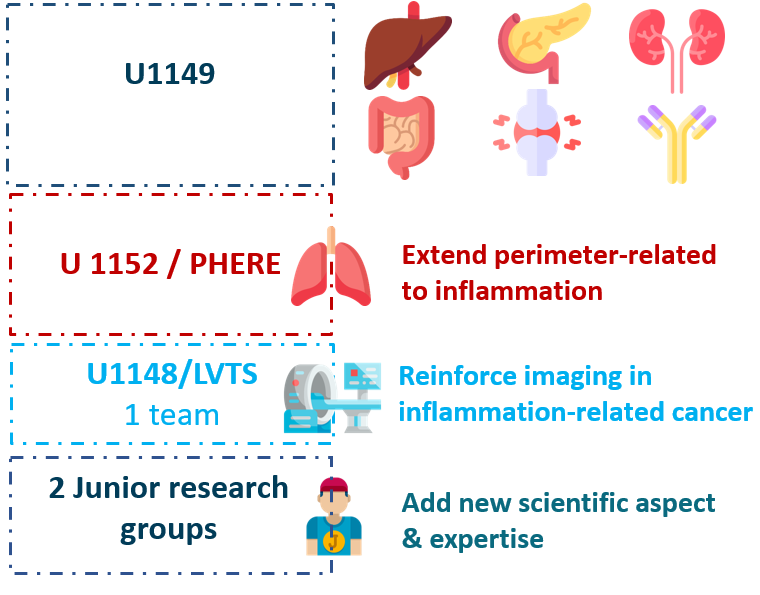
Today, the CRI brings together more than 330 researchers, engineers and administrative staff spread across two sites (Bichat and Beaujon) and collaborates with the Bichat and Beaujon hospitals. It is headed by Valérie Paradis and co-headed by Sophie Lotersztajn.
Le CRI est un acteur majeur du laboratoire d’excellence Infibrex coordonné par B. Crestani, du RHU inFire (co-coordonné par B. Crestani, G. Steg & E. Daugas), du FHU MOSAIC, du RHU Liver-Track, QUID-NASH et Operandi de MOSAIC.
The aim of these teams, which make up the CRI, is to establish a ‘Centre of Excellence’ that links basic research with translational and clinical research into inflammatory diseases, and to ensure the best possible care for patients.
Scientific policy
- Promote and facilitate active collaboration between scientists and clinicians in inflammation research
- Promoting the emergence of new research projects and teams in the field of inflammatory mechanisms
- Contributing to the training of young researchers
- Establish stronger academic and industrial partnerships to promote the application of research results
- Contribute to France’s international reputation through high-quality research
CRI’s scientific objectives
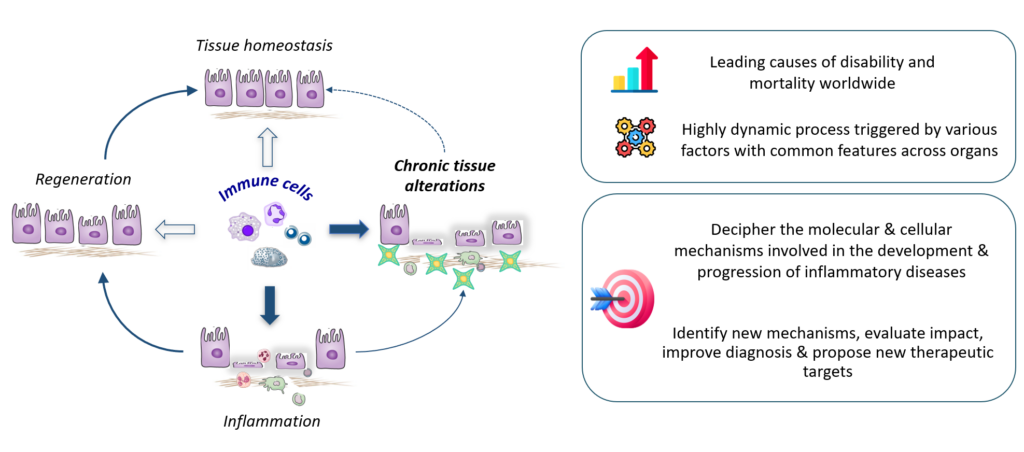
- Fundamental understanding of the basis of inflammatory processes and the development of fibrosis
- Identify new pathophysiological mechanisms and biomarkers associated with inflammatory diseases, and develop new imaging tools.
- Create new preclinical animal models for proof-of-concept (POC) studies of inflammatory diseases
- Search for new therapeutic approaches.
Scientific Topics:
- Pathophysiology of inflammatory and fibrotic diseases
- Oncogenic inflammation & tumour development
- Signalling and dynamics of immune cells
3 cross-cutting research areas:
- Identify common features of inflammatory mechanisms in immune, endothelial and fibroblast cells (lung/kidney/digestive tract)
- Decipher the sequence of pro-oncogenic events in the context of inflammation Characterize tumor heterogeneity via the tumor microenvironment
- Describe the molecular mechanisms of the inflammatory response, in particular oxidative stress and intracellular traffic