

Authors
Lactobacillaceae may contribute to hyperphagia observed in short small bowel syndrome: a perspective for therapeutic approaches based on simple or complex microbiota transplantation?
Short bowel syndrome (SBS), resulting from extensive resection of the small intestine, is the leading cause of chronic intestinal failure. SGC patients spontaneously develop intestinal hyperplasia, hyperphagia and altered intestinal microbiota. These adaptations help to reduce their dependence on parenteral nutrition, which is the reference treatment, and consequently improve their prognosis and quality of life. In these patients, colon preservation plays a crucial role in energy recovery, thanks to the fermentation of undigested food by the intestinal microbiota.
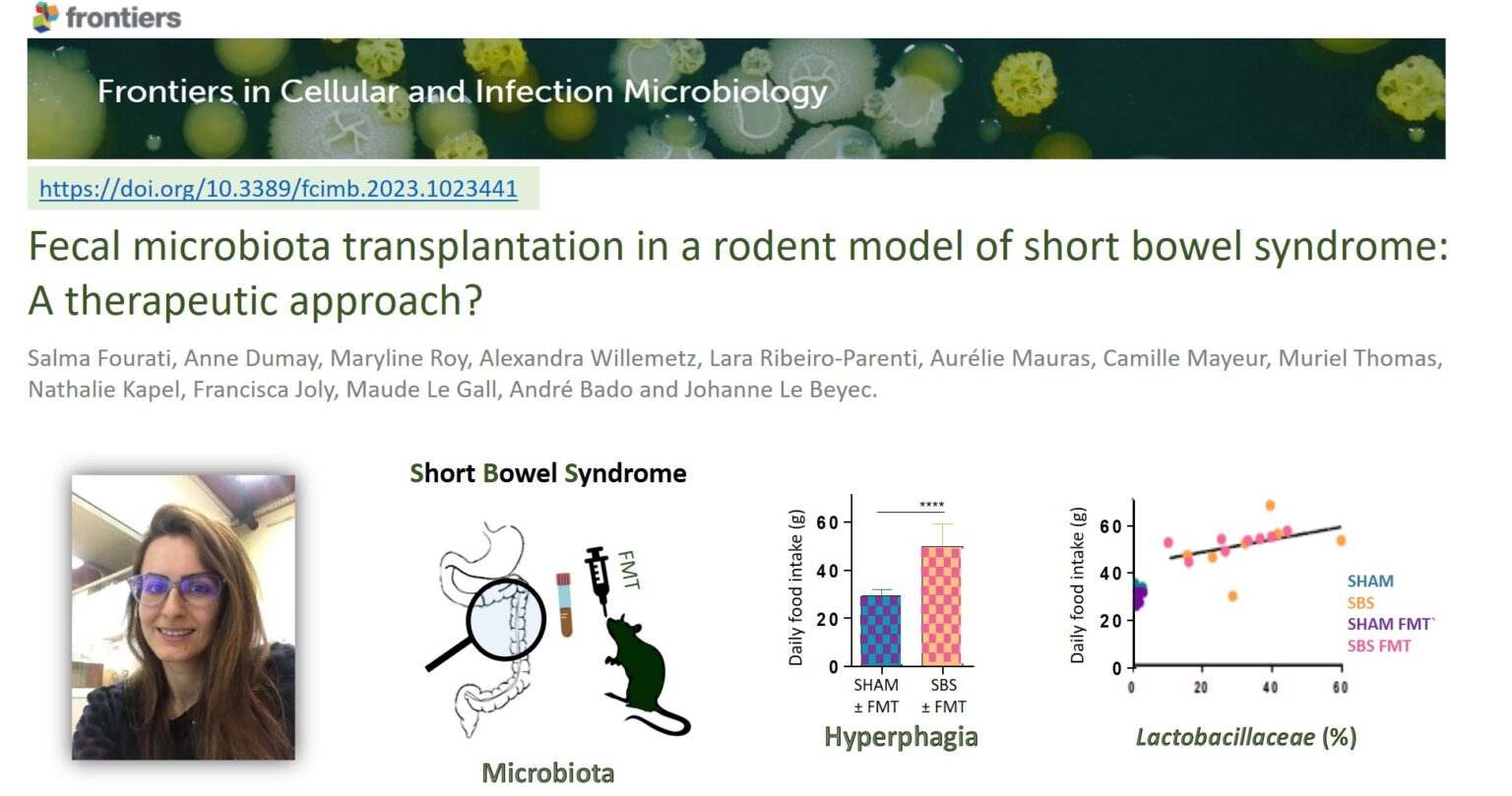
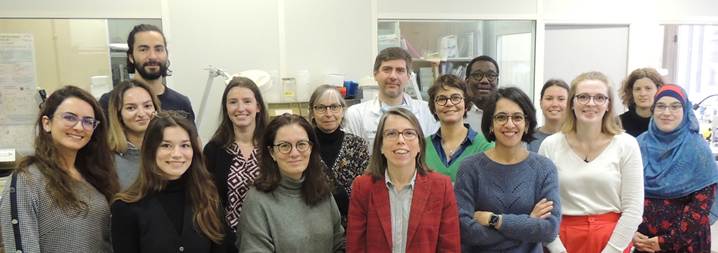
In their paper published in Frontiers in Cellular and Infection Microbiology (March 3, 2023), Salma Fourati and Johanne Le Beyec of the PIMS research team, led by M. Le Gall & A. Bado, in collaboration with members of JP Hugot’s team, evaluated the feasibility and efficacy of Fecal Microbiota Transplantation (FMT) on SGC rats with jejuno-colic anastomosis.
The transplanted microbiota was derived from the faeces of rats fed an obesogenic diet (which favours a microbiota efficient for energy recovery). Analysis of the microbiota after transplantation showed that the inoculated bacteria took hold in control rats but not in SGC rats. This may be explained by the specific luminal environment in the colon of SGC subjects (richer in oxygen, lower pH, etc.) favoring aerotolerant bacteria over transplanted anaerobic bacteria. MFT had no impact on weight or food intake in either the control or SGC rat groups. On the other hand, this study demonstrated for the first time in an animal model the development of hyperphagia, as observed in patients. Indeed, SGC rats doubled their food intake compared with control rats, and this food intake was positively correlated with the abundance of Lactobacillaceae present in their microbiota, suggesting a potential role for this bacterial family in adapting feeding behavior.
Signals from the microbiota appear to contribute to the development of adaptation mechanisms in GSC, including hyperphagia. A therapeutic approach based on microbiota transplantation could therefore be of interest if the microbiota contains lactobacillus strains adapted to the specific environment of GSC. The team is now focusing on identifying and testing the best strains to use.