


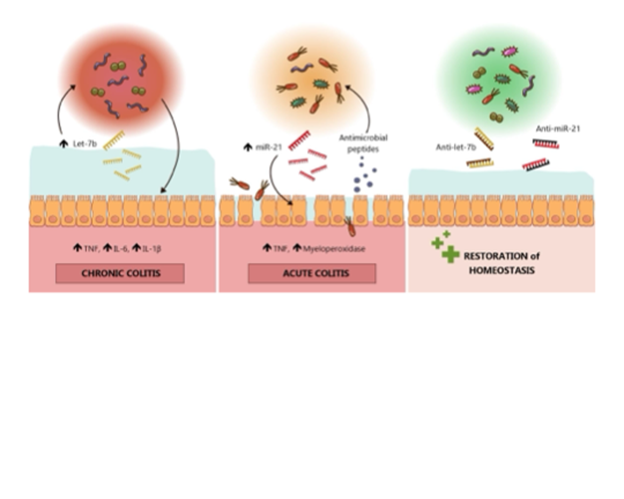

A new study by the Viennese team, led by Maite Casador-Bedmar, has shown that fecal microRNAs, let-7b and miR-21, lead to intestinal inflammation by altering the composition of the microbiota.
This study shows that these microRNAs, which are elevated in patient stools and mouse models of colitis, can directly shape the gut microbiota and induce the inflammation characteristic of IBD. These microRNAs disrupt the gut microbiota, increase the pro-inflammatory response and weaken the barrier function. Conversely, inhibition of these microRNAs reduces inflammation and improves intestinal health, suggesting these molecules as new therapeutic targets in IBD and restoring balance to the gut microbiome.
